Vice President of Ghana, Prof. Naana Jane Opoku-Agyemang, has emphasized the need for the country to rethink its approach to financing development and civic engagement.
Speaking at the 3rd Ghana Civil Society Forum in Accra on the theme "Reimagining Development Financing and Civic Action – Challenges, Opportunities, and the Way Forward", she stressed that Ghana must shift from dependency to ownership and mobilize new forms of financing to drive development.
The Vice President's call for a change centered on reimagining financing and civic action. She believes that Ghana's development financing should focus on domestic resource mobilization, broadening the tax base, and reforming public financial management systems. This approach, she argues, will enable the country to take ownership of its development agenda and reduce its reliance on external aid.
Let Ghana be a place where local initiative meets strategic investment, where accountability meets empowerment, where development is done with ordinary people in mind." - Vice President Naana Jean Opoku Agyemang
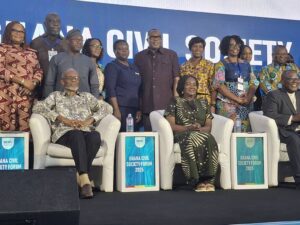
The Role of Civic Action
Prof. Opoku-Agyemang emphasized that development financing is not just about money, but also about power and agency. In this regard, she called for the empowerment of civic actors and the creation of an enabling environment for them to operate effectively, adding that civic action plays a critical role in Ghana's development.
Government-Civil Society Collaboration
The Vice President highlighted the government's commitment to collaborating with civil society to build consensus on key issues. She noted that the government recognizes the importance of civil society in promoting accountability, transparency, and good governance.
On his part, the Executive Director of STAR Ghana Foundation, Ibrahim Tanko, emphasized the organization's commitment to strengthening civil society and promoting philanthropy in Ghana.
Addressing Accountability Concerns
Tanko acknowledges that some civil society organizations (CSOs) have faced allegations of misusing aid. He attributes this to the fact that CSOs are human institutions with varying degrees of effectiveness. To address these concerns, STAR Ghana is setting up two key mechanisms: a peer-review mechanism and strategies for increased accountability and transparency.
Promoting Good Governance
According to him, the peer-review mechanism will evaluate and improve CSOs' performance and accountability, while the strategies for increased accountability and transparency will promote transparency and accountability within CSOs. This will ensure that CSOs are answerable to citizens and are held to high standards of governance," .
By implementing these mechanisms, STAR Ghana aims to promote good governance and transparency within CSOs, ensuring that they are effective and accountable to citizens," he noted
Dr. Nii Moi Thompson, Chairman of the National Development Planning Commission (NDPC), highlighted the pressing challenges facing Ghana's development landscape.
Ghana's development landscape is facing significant challenges, including a decline in traditional donor support and regulatory constraints," he noted.
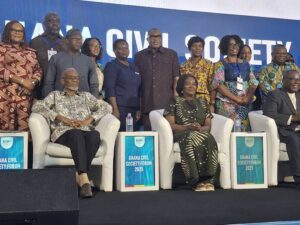
These challenges, he said, have resulted in a skewed global aid distribution, with only 2% of global development aid reaching organizations directly in the Global South. This imbalance highlights systemic inequities in resource allocation, limiting the ability of locally-led organizations to drive change effectively.
The imbalance in global aid distribution, with only 2% of global development aid reaching organizations directly in the Global South, highlights systemic inequities in resource allocation, limiting the ability of locally-led organizations to drive change effectively." - Dr. Thompson stressed.
The Way Forward
To address these challenges, he noted that Ghana needs to rethink its development financing strategies and prioritize locally-led initiatives. The development of innovative solutions, including new financing models and partnerships, can help unlock Ghana's potential for sustainable development. By promoting equitable resource allocation and supporting locally-led organizations, Ghana can drive meaningful change and achieve its development goals.
The Ghana Civil Society Forum 2025 is a national convening of civil society actors, funders, policy makers, private sector players, and development partners. This year’s forum explored innovative approaches to development financing and civic action amidst evolving global and national challenges. It aims to catalyze collaboration, shift the power to citizens, and forge new pathways for inclusive development.
Comments