
Okra Farmers in Atebubu lament low patronage; blame it on COVID-19


Okra farmers at Atebubu in the Atebubu-Amantin Municipality of the Bono East are blaming the low patronage they are recording on the impact of the COVID-19 disease in Ghana.

The farmers, who are worried about the challenges they may face in paying back loans they contracted to boost production, are thus appealing to government for support.

Okra is not only consumed locally as a vegetable, but has a strong export potential and accounts for about 80% of fresh vegetables exported to the European Union Market from Ghana annually. As an exotic vegetable in Europe, it is consumed mostly by people of African, Caribbean and Asian origin.

The main market is the United Kingdom, due to its large Asian and African population. Okra is expected to become more mainstream, providing opportunities for exporters from developing countries.


The crop thrives well in most parts of Ghana where the soil is sandy loam. Major production areas are in the Central, Eastern, Greater Accra, Ashanti, Bono, Bono East, Ahafo, Greater Accra and Volta Regions. The Atebubu-Amantin Municipality in the Bono East Region over the years, has been a major hub of okro production in Ghana, and has over one thousand farmers currently in the business.

Varieties of okra that are mostly grown in Atebubu include; Lady’s Finger, Quim Bombo, Asutem and Labadi Dwarf.

Currently, production of okra is mainly rain fed and concentrated in the South where rainfall is bimodal. Rain-fed production is from March to September in the South. However, in some parts of the Central, Greater Accra and Volta regions, smallholder farmers in some parts cultivate okra under irrigation from late November through April/May.

However, despite a bumper harvest recorded this year, Okra farmers in Atebubu are complaining about low sales are attributing it to the outbreak of the COVID-19 disease in the country. The farmers are worried about the difficulties they might face in paying for loans they secured to expand their farms to boost production.
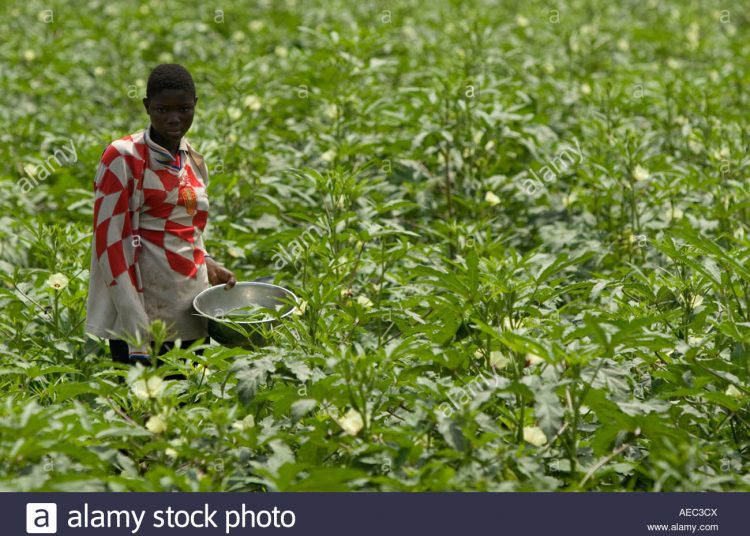
Sulemana Asante, an Okra farmer, said “We the farmers in the Atebubu-Amantin Municipality are really suffering because when we send our produce to the market, they buy a whole basket 5 cedis; whiles we spend 20 cedis on labourers; and so we are not making any profit. Due to the coronavirus, they are not minding us. We really need government’s support because we are suffering here in Atebubu.”

“I cultivated one acre with a loan of 1,500 cedis, but when you send it to the market they do not buy and it goes bad. They buy a basket for 5 cedis, meanwhile we pay the labourers we contract to work on the farm 20 cedis anytime they come. We are appealing to government to help us. We are also appealing to buyers in Kumasi, Takoradi and Accra to come and buy for us” Grace Tuah, another Okra Farmer said.

Source: Citinewsroom

Comments

Popular posts from this blog

Fitch Solutions retains 2025 growth rate projection at 4.2%

 Fitch Solutions has reaffirmed its projection that Ghana’s economy will expand by 4.2% in 2025. This estimate slightly exceeds the International Monetary Fund’s forecast of 4% and the World Bank’s projection of 3.9%. The UK-based research firm attributes its outlook to historically high gold prices, which are expected to cushion the Ghanaian economy against a global slowdown triggered by rising tariffs. Higher gold prices are anticipated to strengthen government revenue, enhance foreign exchange earnings, and help sustain currency stability. The report also highlights that Ghana is relatively less vulnerable to increasing trade restrictions from the United States, given that its primary exports—gold and crude oil—are not directly affected by the tariffs introduced by President Trump’s administration. Moreover, the US constitutes only about 4% to 5% of Ghana’s total exports. In contrast, Ghana’s trade relations are more heavily oriented toward China and European countries, particul...

BoG injects $20m into FX market to support 11 BDCs

  The Bank of Ghana (BoG) has injected $20 million into the foreign exchange market in the latest round of its forward FX auction targeted at Bulk Oil Distribution Companies (BDCs). The intervention, which benefited eleven BDCs, is part of the central bank’s broader strategy to stabilise the cedi and ensure price stability in the petroleum downstream sector. Held on Tuesday, April 29, the auction was priced at a locked exchange rate of GHS 14.28 to the US dollar, with bid offers ranging from GHS 13.85 to GHS 15.55. This move reflects the BoG’s continued effort to deepen forex liquidity and safeguard the domestic fuel supply chain against volatility in global energy markets. By directly supplying FX to BDCs, the central bank seeks to ease pressure on the interbank market, guarantee the uninterrupted flow of petroleum products, and mitigate the pass-through effects of exchange rate fluctuations on fuel prices. The $20 million disbursement forms part of a $120 million programme for th...

Kenpong Travel & Tours Champions Breast Cancer Awareness During Customer Week

  As part of activities to mark Customer Week, Kenpong Travel & Tours, a leading travel agency in Ghana, is joining the global fight against breast cancer. October is Breast Cancer Awareness Month, and the company is passionate about spreading hope and support to those affected. At Kenpong Travel & Tours, we believe that travel and exploration can be therapeutic and empowering. That's why we're committed to supporting our customers and the broader community in the fight against breast cancer. We're proud to stand in solidarity with breast cancer warriors and survivors. At Kenpong Travel & Tours, we believe that everyone deserves a chance to explore the world and create unforgettable memories. Let's prioritize health, support one another, and fight against breast cancer," said Kennedy Agyapong, CEO of Kenpong Travel & Tours. Our efforts are focused on raising awareness, promoting early detection, and supporting those affected by breast cancer. We urg...