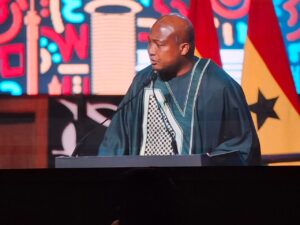
Ablakwa condemns xenophobia, calls for compassion and African unity at 3i Summit

 xenophobia, 3i Africa Summit, South Africa

Samuel Okudzeto Ablakwa has condemned xenophobia and the growing hostility toward African migrants within the continent, warning that such attitudes undermine Africa’s integration and development agenda.

Speaking as keynote speaker at the closing ceremony of the 3i Africa Summit in Accra, the Minister for Foreign Affairs and Regional Integration said Africa cannot pursue economic and financial integration while Africans continue to mistreat one another across borders.

The summit, held on the theme “The Next Frontier: Shaping Africa’s Integrated Fintech Future,” focused on strengthening digital finance, cross-border payments, financial inclusion and regional collaboration across the continent.

Addressing participants on the topic “Regional Financial Integration for Nation Development,” Ablakwa stressed that regional integration remains central to Africa’s economic transformation and global competitiveness.

However, he said true integration must go beyond policy frameworks and trade agreements to include compassion, solidarity and respect for fellow Africans.

We cannot be talking about an integrated Africa when we are not welcoming of each other,” he stated. “How can we believe that Africans pose a threat to us when they come to do business in our countries?” he asked.

The Minister cautioned citizens against taking the law into their own hands when dealing with foreign nationals accused of violating local regulations.

If it is the case that some are not following domestic laws, let law enforcement deal with them. Don’t dehumanise them, don’t attack them,” he stressed.
xenophobia, 3i Africa Summit, South Africa

The minister's comments comes in the wake of xenophobic attacks on African nationals in South Africa which have resulted in the death of some foreigners. In one of those instances, a Ghanaian was seen in a viral video being attacked by people believed to be South Africans.

Ablakwa compared Africa’s handling of migrants with Europe’s response to Ukrainians displaced by the Russia-Ukraine war, noting that millions of Ukrainians were accepted and integrated into European countries without being confined to refugee camps.

Have you seen any Ukrainian refugee camp anywhere?” he asked. “They were welcomed, integrated and given special support policies.”

He expressed concern that many African countries continue to show limited compassion toward fellow Africans fleeing poverty, conflict and economic hardship.

The Foreign Affairs Minister recounted the story of Ghanaian migrant Usman Umar, who survived a dangerous four-year journey through the Sahara Desert and across the Mediterranean Sea to Europe in search of better opportunities.

Reading excerpts from Umar’s memoir, Ablakwa described the harsh realities faced by many African youth pursuing irregular migration.

He revealed that more than 1,700 young Africans reportedly died last year while attempting to cross the Mediterranean Sea.

As African leaders, we must recognise that we have not accomplished our task,” he said. “Our mission is to create economic opportunities that will keep our young people here in Africa.”

According to him, Africa’s future depends not only on financial reforms and digital innovation, but also on Africans believing in one another and supporting homegrown opportunities.

Our solution is more integration — to come together, to love each other, to believe in our products and our innovations,” he added.

Ablakwa further urged the African Union to prioritise discussions on xenophobia and promote policies that encourage unity and inclusion across the continent.

Hatred only destroys. Hatred does not build,” he said.
Samuel Okudzeto Ablakwa has condemned xenophobia and the growing hostility toward African migrants within the continent, warning that such attitudes undermine Africa’s integration and development agenda.

Speaking as keynote speaker at the closing ceremony of the 3i Africa Summit in Accra, the Minister for Foreign Affairs and Regional Integration said Africa cannot pursue economic and financial integration while Africans continue to mistreat one another across borders.

The summit, held on the theme “The Next Frontier: Shaping Africa’s Integrated Fintech Future,” focused on strengthening digital finance, cross-border payments, financial inclusion and regional collaboration across the continent.

Addressing participants on the topic “Regional Financial Integration for Nation Development,” Ablakwa stressed that regional integration remains central to Africa’s economic transformation and global competitiveness.

However, he said true integration must go beyond policy frameworks and trade agreements to include compassion, solidarity and respect for fellow Africans.

We cannot be talking about an integrated Africa when we are not welcoming of each other,” he stated. “How can we believe that Africans pose a threat to us when they come to do business in our countries?” he asked.

The Minister cautioned citizens against taking the law into their own hands when dealing with foreign nationals accused of violating local regulations.

If it is the case that some are not following domestic laws, let law enforcement deal with them. Don’t dehumanise them, don’t attack them,” he stressed.

The minister's comments comes in the wake of xenophobic attacks on African nationals in South Africa which have resulted in the death of some foreigners. In one of those instances, a Ghanaian was seen in a viral video being attacked by people believed to be South Africans.

Ablakwa compared Africa’s handling of migrants with Europe’s response to Ukrainians displaced by the Russia-Ukraine war, noting that millions of Ukrainians were accepted and integrated into European countries without being confined to refugee camps.

Have you seen any Ukrainian refugee camp anywhere?” he asked. “They were welcomed, integrated and given special support policies.”

He expressed concern that many African countries continue to show limited compassion toward fellow Africans fleeing poverty, conflict and economic hardship.

The Foreign Affairs Minister recounted the story of Ghanaian migrant Usman Umar, who survived a dangerous four-year journey through the Sahara Desert and across the Mediterranean Sea to Europe in search of better opportunities.

Reading excerpts from Umar’s memoir, Ablakwa described the harsh realities faced by many African youth pursuing irregular migration.

He revealed that more than 1,700 young Africans reportedly died last year while attempting to cross the Mediterranean Sea.

As African leaders, we must recognise that we have not accomplished our task,” he said. “Our mission is to create economic opportunities that will keep our young people here in Africa.”

According to him, Africa’s future depends not only on financial reforms and digital innovation, but also on Africans believing in one another and supporting homegrown opportunities.

Our solution is more integration — to come together, to love each other, to believe in our products and our innovations,” he added.

Ablakwa further urged the African Union to prioritise discussions on xenophobia and promote policies that encourage unity and inclusion across the continent.

Hatred only destroys. Hatred does not build,” he said.

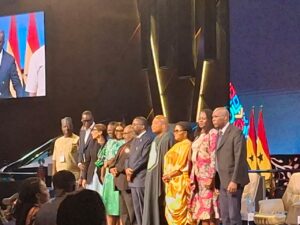
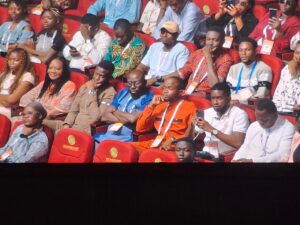
The 3i Africa Summit brought together central bank governors, regulators, policymakers, fintech firms, investors and development partners to discuss Africa’s digital finance future.

Jointly organised by the Bank of Ghana and Ghana Interbank Payment and Settlement Systems, with support from MTN Group and the Global Finance & Technology Network, the summit focused on advancing financial inclusion, digital payments, fintech innovation and cross-border interoperability.

Held at the Destiny Arena, the forum also explored how technology and regulatory harmonisation can support the implementation of the African Continental Free Trade Area and accelerate Africa’s transition toward an integrated digital economy.

The 3i Africa Summit brought together central bank governors, regulators, policymakers, fintech firms, investors and development partners to discuss Africa’s digital finance future.

Jointly organised by the Bank of Ghana and Ghana Interbank Payment and Settlement Systems, with support from MTN Group and the Global Finance & Technology Network, the summit focused on advancing financial inclusion, digital payments, fintech innovation and cross-border interoperability.

Held at the Destiny Arena, the forum also explored how technology and regulatory harmonisation can support the implementation of the African Continental Free Trade Area and accelerate Africa’s transition toward an integrated digital economy.

Comments

Popular posts from this blog

Fitch Solutions retains 2025 growth rate projection at 4.2%

 Fitch Solutions has reaffirmed its projection that Ghana’s economy will expand by 4.2% in 2025. This estimate slightly exceeds the International Monetary Fund’s forecast of 4% and the World Bank’s projection of 3.9%. The UK-based research firm attributes its outlook to historically high gold prices, which are expected to cushion the Ghanaian economy against a global slowdown triggered by rising tariffs. Higher gold prices are anticipated to strengthen government revenue, enhance foreign exchange earnings, and help sustain currency stability. The report also highlights that Ghana is relatively less vulnerable to increasing trade restrictions from the United States, given that its primary exports—gold and crude oil—are not directly affected by the tariffs introduced by President Trump’s administration. Moreover, the US constitutes only about 4% to 5% of Ghana’s total exports. In contrast, Ghana’s trade relations are more heavily oriented toward China and European countries, particul...

BoG injects $20m into FX market to support 11 BDCs

  The Bank of Ghana (BoG) has injected $20 million into the foreign exchange market in the latest round of its forward FX auction targeted at Bulk Oil Distribution Companies (BDCs). The intervention, which benefited eleven BDCs, is part of the central bank’s broader strategy to stabilise the cedi and ensure price stability in the petroleum downstream sector. Held on Tuesday, April 29, the auction was priced at a locked exchange rate of GHS 14.28 to the US dollar, with bid offers ranging from GHS 13.85 to GHS 15.55. This move reflects the BoG’s continued effort to deepen forex liquidity and safeguard the domestic fuel supply chain against volatility in global energy markets. By directly supplying FX to BDCs, the central bank seeks to ease pressure on the interbank market, guarantee the uninterrupted flow of petroleum products, and mitigate the pass-through effects of exchange rate fluctuations on fuel prices. The $20 million disbursement forms part of a $120 million programme for th...

Kenpong Travel & Tours Champions Breast Cancer Awareness During Customer Week

  As part of activities to mark Customer Week, Kenpong Travel & Tours, a leading travel agency in Ghana, is joining the global fight against breast cancer. October is Breast Cancer Awareness Month, and the company is passionate about spreading hope and support to those affected. At Kenpong Travel & Tours, we believe that travel and exploration can be therapeutic and empowering. That's why we're committed to supporting our customers and the broader community in the fight against breast cancer. We're proud to stand in solidarity with breast cancer warriors and survivors. At Kenpong Travel & Tours, we believe that everyone deserves a chance to explore the world and create unforgettable memories. Let's prioritize health, support one another, and fight against breast cancer," said Kennedy Agyapong, CEO of Kenpong Travel & Tours. Our efforts are focused on raising awareness, promoting early detection, and supporting those affected by breast cancer. We urg...