Prudential Bank Plants Over 200 Trees at Achimota Forest, Deepens Commitment to Environmental Sustainability
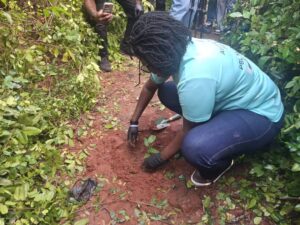 Prudential Bank has reaffirmed its commitment to environmental sustainability by planting 200 trees at the Achimota Forest Reserve as part of the government's National Tree for Life Reforestation Initiative, describing the exercise as a long-term investment in Ghana's environmental future rather than a symbolic corporate social responsibility activity.
The exercise, which brought together management and staff of the bank alongside officials of the Forestry Commission, forms part of the bank's ongoing sustainability agenda aimed at supporting climate resilience, restoring degraded forest landscapes and promoting responsible environmental stewardship.
Speaking to journalists after participating in the exercise, the Executive Head of Operations at Prudential Bank, Felix Awuku, said the institution views environmental sustainability as an integral part of its corporate strategy and business operations.
According to him, the bank's participation in the national tree planting campaign reflects its commitment to balancing economic growth with environmental responsibility.
We are excited to be part of this Tree for Life initiative. For us, this is not just a tree planting exercise. It is a reflection of who we are as a bank. While we remain committed to financial growth, we are equally committed to environmental sustainability," he said.
The National Tree for Life Reforestation Initiative is a national flagship programme to combat climate change, reclaim lands degraded by illegal mining (galamsey), and restore depleted forests. The government targets planting 30 million seedlings across the country to accelerate landscape restoration and community-led ecosystem management.
Awuku explained that the tree planting exercise is one of several sustainability interventions being undertaken by Prudential Bank to reduce its environmental footprint and contribute to national climate action efforts.
This is our way of contributing our quota towards ensuring that we have a sustainable environment for future generations. As a responsible corporate institution, we believe we all have a role to play in protecting our natural resources."
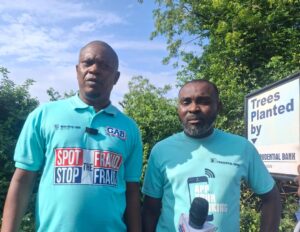
He disclosed that the bank has been participating in organised tree planting exercises for the past six years, making this year's event another milestone in its environmental conservation journey, where employees volunteering their time to plant and nurture trees.
In fact, this is our sixth year undertaking this project. Every year we continue to strengthen our commitment because sustainability is not a one-off event; it is a continuous responsibility."
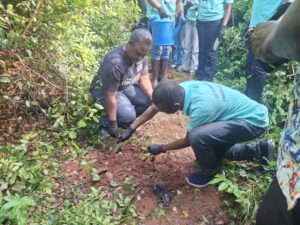
At the Achimota Forest site alone, Prudential Bank planted about 200 tree seedlings, comprising indigenous forest species selected by the Forestry Commission.
We came here this morning with our colleagues, and many of them are already in the forest planting trees. It demonstrates our commitment as one team, united by a common purpose and our shared responsibility as a corporate institution to protect the environment."
Although he could not immediately provide the cumulative number of trees planted by the bank over the past six years, Mr. Awuku noted that the figure runs into several hundreds, with records available through the Forestry Commission.
He emphasized that the bank's environmental agenda extends beyond tree planting.
According to him, Prudential Bank has adopted several internal sustainability practices aimed at reducing waste and promoting responsible resource management across its operations.
From a regulatory perspective, sustainability is one of the key areas institutions are expected to drive. But beyond regulation, it is also the right thing to do."
He explained that the bank has significantly reduced the use of plastic materials within its operations.
We have moved away from the use of rubber bags and are increasingly deploying paper bags in our activities. We have also introduced waste segregation systems where plastics and other waste materials are separated to improve waste management and recycling."
Awuku called on other corporate organisations to embrace sustainability as a core business principle, stressing that protecting the environment requires collective action.
Environmental sustainability cannot be left to one institution or government alone. Every organisation has a responsibility to contribute towards preserving our environment."
Officials of the Forestry Commission commended Prudential Bank for consistently supporting national afforestation efforts.
The Range Manager in charge of the Achimota Forest planting site, Emelia Oduro, said the National Tree for Life Initiative seeks to restore degraded forest landscapes while protecting critical ecological assets.
Today we are restoring degraded portions of the Achimota Forest Reserve, and Prudential Bank has joined us to support this important national exercise."
She described the Achimota Forest Reserve as one of the country's most important urban forests.
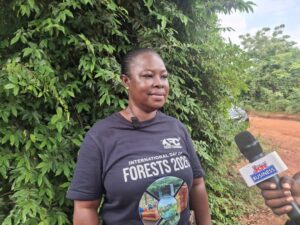
"Achimota Forest Reserve is the only forest reserve within the Greater Accra Region and the national capital. It plays a very significant role in controlling erosion and improving the environmental quality of the city."
According to her, the reserve covers approximately 144 hectares, making its protection essential to maintaining ecological balance in Accra.
She disclosed that indigenous tree species including mahogany, Milicia (odum) and Milina were being planted during the exercise to restore degraded sections of the forest.
Oduro encouraged more corporate institutions, civil society organisations and individuals to actively participate in the Tree for Life Initiative.
We encourage other institutions to come on board because restoring Ghana's forests benefits all of us. It gives us a greener future and helps reduce the impact of the harsh weather conditions we are increasingly experiencing."
She explained that restoring degraded forests contributes to improved biodiversity, carbon sequestration, erosion control and climate resilience.
However, she identified indiscriminate dumping of plastic waste by some members of the public as one of the biggest threats facing the Achimota Forest Reserve.
According to her, despite regular clean-up exercises by Forestry Commission staff, some visitors continue to litter the forest with plastic waste.
The plastics are one of our biggest challenges. We have teams that clean the forest every day, but people continue to dump plastic waste here. Some even bring the waste from their homes and dispose of it in the forest."
She also raised concerns about the activities of prayer groups that frequently enter restricted portions of the forest reserve.
Although designated prayer areas exist, she said some worshippers continue to access protected restoration zones, making conservation efforts more difficult.
We continue to educate them and ask them to stay within the approved areas, but some still enter the restricted sections. We keep monitoring the situation because protecting the forest requires everyone's cooperation."
The National Tree for Life Initiative forms part of Ghana's broader climate adaptation and environmental restoration agenda aimed at reversing deforestation, restoring degraded landscapes and increasing the country's forest cover through partnerships involving government, corporate organisations and citizens.
Comments