By Kofi Ahovi, Antalya, Türkiye
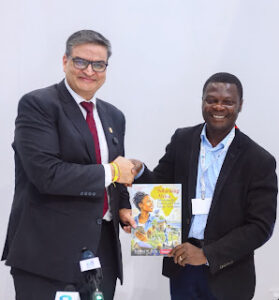 The Jospong Group of Companies is exploring a strategic partnership with the International Solar Alliance (ISA) to expand solar energy investments across its operations in Ghana and other African markets, with a focus on waste management, agriculture, skills development and green job creation.
The proposed collaboration, discussed at the ongoing 31st United Nations Climate Change Conference (COP31) in Antalya, Türkiye, is expected to combine the ISA’s technical expertise and access to international solar initiatives with Jospong’s operational presence across Africa to accelerate the adoption of renewable energy.
A key component of the proposed partnership is the solarisation of Jospong’s 36 waste treatment plants in Ghana, with the potential to extend the initiative to its operations in other African countries.
The engagement also explored opportunities to establish a Solar Academy to train young Africans in solar technology, installation and maintenance, as well as support solar-powered irrigation to improve agricultural productivity and strengthen food security.
Presenting the solarisation roadmap, the Director-General of the ISA, Dr. Ashish Khanna, said Africa had enormous potential to become a major destination for solar investment but needed stronger partnerships, local financing and technical capacity to accelerate deployment.
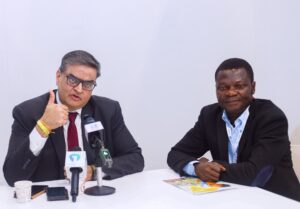 He noted that global investment in solar energy was expanding rapidly, with Africa recording a 50 per cent increase in solar capacity for the first time, although the continent continued to account for a relatively small share of global installed solar capacity.
Dr. Khanna said solar energy had become increasingly attractive because of its declining cost, climate benefits and contribution to national energy security.
“The world took 25 years to do the first 1,000 gigawatts. Every 1,000 gigawatts is happening every two years,” he said in remarks at COP31, highlighting the pace of growth in the global solar industry.
He said Africa needed to develop a strong ecosystem built around predictable policies, accessible financing, technical skills, innovation and digitalisation to attract investment and sustain solar projects.
Dr. Khanna also urged African countries to mobilise domestic financial institutions to support renewable energy investments rather than relying solely on external funding.
He identified solar-powered irrigation as a major opportunity for Ghana, explaining that access to solar pumps could enable farmers to cultivate throughout the year instead of depending heavily on rainfall.
He disclosed that the ISA had begun a pilot programme involving 500 solar-powered irrigation pumps in Ghana, which could provide a foundation for a larger national programme.
Jospong targets solar-powered operations
Welcoming the proposed collaboration, the General Manager of the Jospong Green Transition Office, Dr. Ing. Glenn Kwabenah Gyimah, said the Group was ready to work with the ISA to integrate solar energy into its waste management infrastructure and extend the model across its African operations.
“Jospong stands ready to begin with solarising our 36 plants in Ghana and to extend this model to our Africa projects,” he said.
“This reflects our strong commitment to low-carbon project development and to minimising the footprint of our products and services as we drive towards our carbon neutrality agenda,” he added.
The proposed solarisation programme forms part of Jospong’s wider green transition strategy, which includes plans to convert about 1,000 waste collection trucks from diesel to electric power, supported by solar mini-grids, charging stations and energy storage systems.
The transition is expected to reduce the Group’s reliance on fossil fuels, improve energy efficiency and lower emissions from its waste management operations.
Beyond industrial applications, the proposed partnership is expected to promote technology transfer and build local expertise to support the development, installation and maintenance of solar energy systems.
Private sector investment critical to Africa’s solar transition
Dr. Khanna said the private sector would be central to delivering Africa’s renewable energy ambitions, but stressed that investors needed clear policies, transparent tariffs and bankable power purchase agreements to commit capital to projects.
He called for competitive procurement processes and predictable regulatory arrangements to improve accountability and give investors confidence.
“The Global South doesn't need talks. The Global South needs actual implementation,” he said in his broader remarks on the need to turn climate commitments into practical projects.
The ISA, an intergovernmental organisation comprising 116 member and signatory countries, is working towards mobilising US$1 trillion in solar investments by 2030.
Its initiatives include the Africa Solar Facility, a US$200 million financing facility intended to support African solar entrepreneurs, alongside programmes to train local professionals and expand solar-powered agricultural applications.
Ghana signed its Country Partnership Framework with the ISA in September 2025, identifying solar rooftops, community mini-grids, agricultural applications and capacity development as priority areas for cooperation.
The proposed Jospong-ISA collaboration is expected to provide an avenue for translating these priorities into private sector-led investments.
Jospong’s green transition programme has also attracted international climate finance interest. At COP28, the Group secured Swiss Government authorisation for internationally transferred mitigation outcomes from its composting facilities, with an estimated value of US$20 million by 2030.
The proposed solar partnership could therefore strengthen the Group’s efforts to integrate renewable energy into its environmental services while supporting Africa’s broader transition towards cleaner energy, sustainable industries and climate-resilient economies.
Comments