Fish sellers at the James Town Fishing Harbour in Accra have continued to trade on the shoreline despite the opening of a purpose-built market in 2024, raising concerns over hygiene and food safety at one of the capital’s major fishing centres.
The market, inaugurated in September 2024 as part of the fishing harbour project, has capacity for about 240 traders and was designed to provide a more orderly environment for fish trading.
But many women continue to sort and sell fish on the bare ground along the seafront, exposing their produce and trading activities to weather, plastic waste and other unhygienic conditions.
Some traders also operate at the Shatta and La-Gbasetey beaches, where the environment is characterised by plastic waste and open defecation.
For some traders, however, the shoreline remains preferable to the new facility.
A 63-year-old fish seller, Ode Lokko, who said she has been in the business for 42 years, said the nature of fresh fish trading made an enclosed market less convenient.
We prefer to be trading on the shore of the sea rather than confine ourselves inside the constructed market building,” she said, adding that she was accustomed to selling on the floor.
She also cited concerns about drainage and the possibility of unpleasant odours inside the facility.
The Acting Manager of the James Town Fishing Harbour, Ing. Stephen Owiah, rejected claims that the market had drainage defects and said the main challenge was resistance by traders to adopting the facility.
The women have only been recalcitrant in adhering to standard practice,” he said, adding that the harbour authorities were engaging the leadership of the fisherfolk to facilitate their relocation into the market.
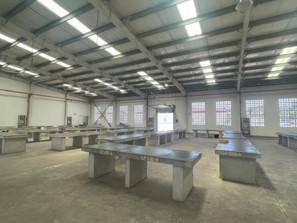 “Where they sell the fish is unhygienic and we can’t sit aloof for such practice to continue. We must not compromise food safety for people’s unjustifiable interest,” Owiah said.
The Ga State Chief Fisherman, Nii Abeo Kyerekuanda V, said his office had held extensive discussions with the traders and was optimistic that they would soon move into the market.
As fisherfolk, we have the responsibility to adhere to acceptable and standard practices. We must be adaptable to change in the broader interest of all,” he said.
The issue came to light during a familiarisation tour of the James Town Fishing Harbour by members of the Ghana Agricultural and Rural Development Journalists Association (GARDJA).
The visit formed part of GARDJA’s six-month Save Our Sea (SOS) Campaign, an initiative supported by the Earth Journalism Network to promote marine conservation, strengthen environmental accountability and highlight challenges facing Ghana’s fisheries and coastal communities.
The campaign also seeks to promote evidence-based reporting on threats to Ghana’s marine resources and accountability in the management of the country’s fisheries and coastal environment.
The initiative is aligned with Ghana’s contribution to the 30x30 target under the Kunming-Montreal Global Biodiversity Framework, which calls for at least 30% of the world’s terrestrial, inland water, marine and coastal areas to be effectively conserved and managed by 2030.
Comments