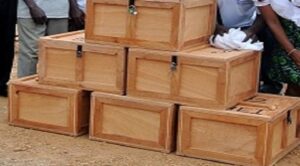
 For decades, the wooden chop box has been a symbol of every Ghanaian boarding school experience. Crafted by the local carpenter, painted with the student's name and sealed with a small padlock, it was more than just a box - it was a piece of home.
Today, that tradition is under threat. Across our Senior High Schools, dormitories are increasingly dominated by imported Chinese plastic chop boxes, which now sell for GHC 600 to GHC 800, while the durable, locally-made wooden chop box costs only GHC 250 to GHC 400.
We are literally paying twice the price to destroy our own economy.
The Wooden Chop Box: A Ghanaian Value Chain
The wooden chop box is not just wood and nails. It represents a complete local economic ecosystem. Its production sustains the timber seller at Sokoban Wood Village, the master carpenter at Suame Magazine or Anloga, the painter who inscribes the student's details, the welder who reinforces the locks, and most importantly, the young apprentice - often a JHS graduate - who is learning a productive trade.
When a parent buys one wooden chop box, that GHC 300 circulates within Ghana for months. It pays rent, school fees, and food for at least five Ghanaian families. It is strong, lasts for three to four years, can be easily repaired, repainted, and passed on to a younger sibling. It is fully biodegradable.
The Plastic Chop Box: An Imported Liability
The Chinese plastic alternative offers none of these benefits. It is manufactured in China, imported fully finished, and sold by large-scale importers. It creates zero jobs for Ghanaian artisans.
Every GHC 700 spent on a plastic box is capital flight - money that leaves Ghana instantly. It is fragile; it cracks on tiled floors, its plastic hinges snap, and its locks fail. Unlike wood, it cannot be repaired by the local welder. When it breaks, the entire GHC 800 investment is thrown into the bin, eventually becoming plastic waste that will choke our drains and landfills for centuries.
The Economic Impact in Numbers
Let us be realistic. With over 150,000 students placed in SHS 1 annually, if just 100,000 of them opt for a plastic chop box at an average price of GHC 700, Ghana loses GHC 70 million every single academic year to China - on chop boxes alone.
That same GHC 70 million could produce over 200,000 wooden chop boxes, sustain more than 10,000 carpenters and their apprentices throughout the season, and keep all that wealth circulating within our local economy. We are exporting jobs and importing unemployment.
A Call for Rethink: Heads, Teachers, GES and Government
1. To Heads of Senior High Schools and Teachers:
Some school authorities, in the quest for uniformity and neatness in dormitories, are subtly encouraging - and in some cases directing students to buy - plastic boxes. This is contradictory. We cannot teach patriotism and "Buy Made in Ghana" in Social Studies and Business Management, while practically banning Made in Ghana products in our dormitories. School policies must explicitly state that wooden chop boxes are allowed and preferred.
2. To the Ghana Education Service (GES):
GES must review its prospectus guidelines. The official national prospectus should read: "Chop Box - Wooden (Locally Manufactured Recommended)." GES is championing TVET and skills development. It is illogical to train carpenters in our technical and vocational institutions while simultaneously collapsing their primary market by importing what they can produce.
3. To the Government of Ghana:
Practical intervention is needed:
- Regulate Imports: Impose a higher import duty on plastic trunks and chop boxes, and channel the revenue into supporting local carpenter cooperatives.
- Modernize Local Production: Through the Ghana Enterprises Agency, provide soft loans and modern equipment to carpenter associations to produce improved wooden boxes - with waterproof paint, stronger locks, and even wheels.
- Enforce Buy Ghana: The Buy Made in Ghana agenda must move beyond exhibition halls and start from our school dormitories. If we can protect poultry and rice farmers through import restrictions, we must also protect our carpenters.
Conclusion
The facts are stark:
Wooden Chop Box: GHC 250-400. Lasts 4 years. Repairable. Supports Ghanaian families. Eco-friendly.
Plastic Chop Box: GHC 600-800. Lasts 1 year. Irreparable. Supports Chinese factories. Pollutes the environment.
Rejecting the wooden chop box is not a sign of modernity; it is a sign of economic self-sabotage. We are paying more to become poorer.
To all SHS heads, teachers, GES officials, and policymakers - it is time to rethink. If we truly want to industrialize and create jobs, let us start with the simple choices. Let us start from the chop box.
Buy Wooden. Build Ghana. Save Money.
Credit: Francis
Copied from Ghana Institute of Planning
Comments