By Adade Gyamfi
FOR years, Ghana has been celebrated as one of Africa’s emerging leaders in waste management and environmental sanitation. Modern composting plants, waste treatment facilities and innovative recycling initiatives have transformed the country’s sanitation landscape, earning recognition across the continent.
Yet, behind these successes lies a growing concern: how to sustainably finance the collection, treatment, and disposal of the ever-increasing volumes of waste generated daily.
That concern took centre stage at a high-level stakeholder dialogue on landfill and waste management held in Accra, where government officials, local authorities, sanitation experts and private sector operators warned that Ghana risks reversing decades of progress unless a reliable funding model is urgently established.
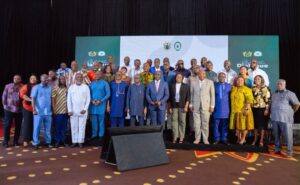
The meeting, organised by the Ministry of Local Government, Chieftaincy and Religious Affairs under the theme: ‘Alleviating Waste Disposal Crisis in Greater Accra,’ brought together key actors in the sanitation sector at the Kempinski Hotel Gold Coast City on June 8, 2026.
Their message was unanimous: waste management is a public good that cannot be financed solely by individual households and businesses.
Participants argued that while citizens must contribute to sanitation services, government must identify dedicated and sustainable funding sources to support the sector. They expressed concern that the Sanitation and Pollution Levy, introduced to provide financial backing for sanitation services through fuel purchases, is no longer playing its intended role in supporting waste management activities.
Without adequate financing, they warned, the Greater Accra Metropolitan Area (GAMA) could lose many of the gains achieved over the last two decades in environmental cleanliness, waste collection and public health.
Growing Cities, Growing Waste
 Ghana's urban population continues to expand rapidly, creating enormous pressure on existing waste management infrastructure.
Delivering the keynote address, the Minister for Local Government, Chieftaincy and Religious Affairs, Hon. Ahmed Ibrahim, painted a sobering picture of the challenge facing the country.
According to him, Ghana currently generates approximately 4,400 tonnes of solid waste every day, amounting to nearly 1.6 million tonnes annually. While the country has achieved an average collection rate of about 80 percent, the remaining uncollected waste continues to pose environmental and public health risks.
More worrying, he noted, is the projection that waste generation will increase substantially over the coming decade as urbanisation accelerates and populations grow.
The Minister stressed that investing in modern waste treatment facilities and efficient collection systems can no longer be postponed. However, he identified financing as the single biggest obstacle confronting the sector.
Waste management, he explained, cannot be left entirely to market forces. Drawing lessons from countries such as South Korea, he argued that governments around the world continue to provide significant support for sanitation services because of their direct impact on public health and environmental protection.
He disclosed that discussions are underway with the Ministry of Finance to secure dedicated funding to clear outstanding obligations owed to private waste
According to him, even the most advanced waste management infrastructure cannot function effectively without reliable operational funding. Delayed payments to service providers, he warned, could trigger serious environmental and health consequences.
The Landfill Debate
The President of the Environmental Service Providers Association (ESPA) and Executive Chairman of the Jospong Group of Companies, Dr. Joseph Siaw Agyepong, challenged the continued dependence on landfills as the primary solution to Ghana's waste problems.
In his view, landfill disposal represents an outdated model that has consistently failed to keep pace with modern waste management demands.
Dr. Agyepong revealed that all 17 engineered landfills constructed across Ghana with support from Ghana’s development partners reached capacity within a decade, highlighting the limitations of relying on landfill infrastructure alone.
Instead, he advocated a more integrated approach that prioritises waste collection, transfer stations, recycling, composting and resource recovery before considering landfill disposal as a last resort.
There is a growing global shift towards circular economy principles, where waste is increasingly viewed as a resource that can be transformed into valuable products rather than simply buried underground, he added.
The Economics of Waste
Funding emerged repeatedly as the central challenge confronting the sanitation sector as industry operators highlighted difficulties in revenue mobilisation and cost recovery, noting that current tariff structures remain inadequate to support the level of investment required.
According to Dr. Agyepong, international benchmarks suggest that households in lower-middle-income countries typically pay between US$15 and US$20 monthly for waste collection services.
In Ghana, however, service providers continue to struggle with low collection rates and inadequate revenue streams, creating significant financial pressure across the industry.
The situation raises broader questions about how developing countries can finance essential environmental services while balancing affordability for citizens.
Stakeholders argued that sanitation should be treated similarly to other critical public services such as healthcare, education and infrastructure, which receive varying degrees of public support because of their societal importance.
A Continental Success Story Worth Protecting
Despite the challenges, participants highlighted Ghana's remarkable achievements in sanitation innovation.
Over the past two decades, the country has built more than 50 waste treatment and composting facilities, positioning itself among Africa's leaders in environmental sanitation technology.
Ghanaian waste management firms are now exporting expertise beyond the country's borders, supporting sanitation projects and environmental initiatives in countries such as Kenya and Ethiopia.
According to Dr. Agyepong, this success has been driven by long-term investments in local capacity development and human resource training.
He revealed that sanitation service providers have collectively supported the training of hundreds of highly skilled professionals who now contribute to waste management systems both within Ghana and across Africa.
The sector's growth has created thousands of jobs while helping improve public health outcomes, reduce environmental pollution and strengthen urban resilience.
The Cost of Inaction
Perhaps the most compelling argument for increased investment came from research findings presented during the dialogue.
The studies estimated that poor waste management costs Ghana more than GH¢6.2 billion annually through flood-related destruction, healthcare expenditures and environmental degradation.
The figures serve as a reminder that sanitation is not merely a cleanliness issue but an economic one.
Blocked drains contribute to devastating floods, indiscriminate waste disposal pollutes water bodies, and poor sanitation practices increase the burden on healthcare systems.
Experts argued that investing in effective waste management today is significantly cheaper than dealing with the consequences of environmental neglect tomorrow.
A Shared Responsibility
As discussions concluded, stakeholders agreed that addressing Greater Accra's waste disposal crisis requires stronger collaboration among government institutions, local authorities, private service providers and citizens.
More importantly, they stressed that policy discussions must now translate into practical and sustainable financing mechanisms capable of supporting long-term sanitation improvements.
The consensus was clear: Ghana has made significant progress in transforming its sanitation sector, but maintaining those gains will require more than infrastructure and technology. It will require political commitment, innovative financing and a recognition that waste management is not simply a service to be paid for, but a critical investment in public health, environmental sustainability and national development.
The challenge now is whether Ghana can secure the resources needed to protect the progress it has worked so hard to achieve.
Comments