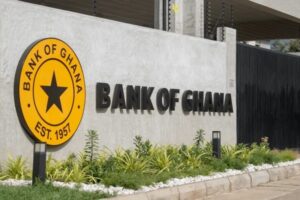
The Bank of Ghana (BoG) has warned the public against using 20 unlicensed digital loan applications operating in the country, citing risks to consumer protection, data privacy and financial sector integrity.
The central bank has also cautioned banks, Specialised Deposit-Taking Institutions (SDIs) and Payment Service Providers (PSPs) against facilitating or processing transactions for the identified digital lenders.
In a public notice issued on Monday, August 3, 2026, the BoG said the affected entities were offering digital credit to consumers through mobile applications and other digital platforms without the required licence or authorisation.
The Bank said their operations were in breach of the Directive for Digital Credit Service Providers in Ghana, which came into effect in September 2025.
The general public is therefore strongly advised not to engage with unlicensed loan providers,” the BoG stated.
It further warned regulated financial institutions and payment service providers not to support the operations of the unlicensed lenders.
Banks, Specialised Deposit-Taking Institutions (SDIs), and Payment Service Providers (PSPs) are also cautioned against facilitating or processing transactions on behalf of unlicensed loan providers,” the Bank added.
Full list of unlicensed loan apps
The 20 digital lending applications identified by the Bank of Ghana are:
Adamfo Loan
Agyapacredit
Amanfi Loan
Arco Cash
Aya Lend
Bucks Now
CediGo
CGrab
DumboCash
FCash
Gh Loans
Gh Loans Pro
Hasty Credit
Newgry Money Tree
Omanpesa
PoPoCedi
Ready Money
Sika Tap
Sikapa Loan
Zigwe Loan
BoG steps up crackdown
The latest warning forms part of the Bank of Ghana's broader efforts to strengthen oversight of Ghana's rapidly expanding digital lending market and protect consumers from potentially abusive or illegal lending practices.
The central bank said the continued operation of unlicensed digital lenders could expose consumers to significant risks, particularly concerning the handling of personal data, consumer protection and compliance with financial sector regulations.
The September 2025 Digital Credit Service Providers Directive established the regulatory framework under which companies providing digital credit services are required to operate.
The BoG said it would continue working with relevant state institutions to identify, investigate and take enforcement action against illegal digital lenders.
The Bank of Ghana will continue working with relevant state institutions to identify, investigate and take enforcement action against illegal digital lenders to protect consumers and preserve confidence in Ghana's financial system,” it said.
The central bank has also encouraged members of the public to report the activities of unlicensed digital loan providers directly to the Bank.
The move is aimed at helping regulators curb illegal digital lending and promote a safer and more transparent digital financial services environment in Ghana.
Growing digital fraud concerns
The Bank of Ghana's latest action comes amid rising concerns over digital fraud and cyber-enabled financial crimes in Ghana.
In a recent advisory, the Cyber Security Authority (CSA) revealed that Ghanaians lost GH¢296,083.68 to online restaurant impersonation scams in the first six months of 2026, more than three times the GH¢84,592 recorded during the same period in 2025.
Reported cases also rose sharply to 112 between January and June this year, up from 61 during the corresponding period last year.
According to the CSA, cyber criminals are increasingly hijacking legitimate restaurant listings on Google Search, Google Maps and other online platforms by altering contact details or creating fake business profiles.
Unsuspecting customers are then persuaded to place food orders using the fraudulent contact details and make advance payments through mobile money or fake payment links. Once payment is made, communication ceases and the food is never delivered.
The Authority has advised consumers to verify business contact details through official websites, verified social media pages or trusted digital platforms before making payments online. It also urged the public never to disclose mobile money PINs, one-time passwords or banking credentials to unknown persons or on suspicious websites.
The warning reinforces growing regulatory efforts to protect consumers as digital financial services and online transactions become increasingly common in Ghana.
Comments