By Adade Gyamfi
Building green cities is not simply about planting more trees. It requires a deliberate transformation of how cities generate energy, manage waste, finance infrastructure, move people and protect natural resources.
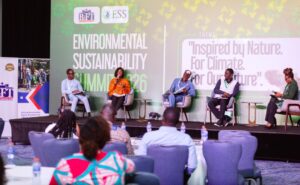
That was the consensus among policymakers, sustainability experts and development partners during a high-level dialogue on green urban development, where participants stressed that Ghana must move beyond policy ambitions to practical, bankable projects capable of attracting long-term investment.
They argued that while Ghana has developed several policies on climate action, energy transition and urban development, implementation remains slow because of inadequate planning, fragmented institutional coordination and limited financing.
Waste segregation & circular economy
Senior Sustainability Officer at the Jospong Green Transitions Office, Dr. Gloria Boamah Kusi, said efficient waste segregation at source remains the foundation of any successful circular economy.
Speaking at a two-day seminar on the National Urban Policy 2026-2035 & National Slum Upgrading and Preservation Strategy 2026-2035, Dr. Boamah Kusi said building green cities is an arduous task.
According to her, waste should no longer be viewed merely as refuse but as a valuable resource capable of generating new products, renewable energy and employment when properly managed.
If we want to harness the value of waste, we must embrace segregation at the point of generation," she said.
She explained that separating waste at source significantly improves material recovery, making recycling and compost production more efficient.
She said efficient collection systems should feed Material Recovery Facilities (MRFs), where recyclable materials can be recovered while organic waste is converted into compost for agricultural use.
Beyond waste recovery, she noted that truly green cities must integrate renewable energy, sustainable transport systems, climate-responsive infrastructure and adequate green spaces to reduce carbon emissions and improve urban resilience.
Green cities require integrated planning
Project Manager for Energy Transition and Green Infrastructure at the French Development Agency (AFD) for Ghana and Liberia, Doris Edem Agbevivi, said waste management, transport and energy are interconnected sectors that must be planned together if cities are to become environmentally sustainable.
She observed that although Ghana has made progress, waste management remains largely linear, with much of the waste collected ending up at disposal sites instead of being recovered for economic value.
"When we simply collect waste and dump it, we have not achieved much," she said.
She noted that apart from initiatives being undertaken by the Jospong Group, many waste collection systems still operate without resource recovery as their primary objective.
Agbevivi questioned the sustainability of the country's transition to electric mobility if supporting infrastructure is not equally green.
"If we are using electric vehicles, what powers the charging systems? Where will the batteries be recycled?" she asked, stressing that every aspect of the green transition must be considered holistically.
 She pointed out that even communities that appear environmentally friendly, such as Aburi, still face challenges with waste recycling, demonstrating that green cities require more than aesthetics.
The Yale University Climate Fellow said financing remains one of the biggest barriers to sustainable urban development.
According to her, Development Finance Institutions (DFIs) provide catalytic, patient capital, but only where governments can present credible, well-developed investment plans.
We do not need plans that simply end as feasibility studies. We need plans that generate implementable projects," she said.
She explained that development partners consistently look for measurable milestones, clear implementation strategies and bankable projects before committing financial support.
Waste management & climate returns
Representing the Ministry of Local Government, Chieftaincy and Religious Affairs, Ing. Godfred Fiifi Boadi Esq. observed that countries around the world are pursuing green city agendas, although implementation often differs because of local realities.
He noted that Ghana's Energy Transition Framework already recognises waste management, transport and energy as critical components of national climate action.
However, he argued that investment priorities need to shift.
According to him, comparatively smaller investments in waste management can deliver greater environmental and economic returns than significantly larger investments in other sectors.
If we evaluate projects based on total life-cycle costs, waste management becomes one of the smartest investments a country can make," he said.
He explained that countries often focus only on the initial cost of infrastructure while ignoring recurring operational and maintenance costs throughout the asset's lifetime.
He also advocated the effective implementation of Extended Producer Responsibility (EPR), under which manufacturers contribute to the cost of collecting, recycling and safely disposing of products after consumer use.
Instead of shifting the financial burden to taxpayers and local assemblies, producers should take greater responsibility for the entire life cycle of their products, he said.
Improved Policy Implementation
Deputy Director for Environment at the Ministry of Environment, Science and Technology, Raymond Ohene Ofori, said Ghana already possesses several policy frameworks capable of supporting green city development.
According to him, what is required now is effective implementation supported by sustainable financing mechanisms.
He disclosed that the Environmental Protection Agency (EPA) now hosts Ghana's Carbon Market Office, creating opportunities for climate finance to support green projects.
"If there is a clear strategy, institutions can help mobilise the necessary resources for implementation," says Ofori, who is also a professional Planner.
He explained that existing national strategies already guide sustainable transport, renewable energy, circular waste management and protection of wetlands and marine ecosystems.
He stressed that the concept of green cities extends far beyond tree planting and encompasses cleaner transport systems, climate-resilient infrastructure, responsible waste management and sustainable urban planning.
Greater institutional coordination needed
Minister for Local Government, Chieftaincy and Religious Affairs, Ahmed Ibrahim, called for stronger collaboration among government ministries and agencies responsible for urban development.
He observed that local assemblies alone cannot deliver green cities because responsibilities relating to roads, housing, transport and sanitation are spread across multiple ministries.
According to him, achieving sustainable urban development requires coordinated planning and implementation rather than isolated interventions.
He noted that many Metropolitan, Municipal and District Chief Executives are often compelled to undertake projects outside their statutory mandates because of institutional overlaps and service delivery gaps.
Turning vision into reality
The discussion concluded with a shared message: Ghana possesses the policy frameworks, technical expertise and growing private sector capacity needed to build green cities.
What remains is the political commitment to integrate planning across sectors, mobilise innovative financing, strengthen public-private partnerships and accelerate investment in circular waste management, renewable energy and sustainable transport.
For many participants, waste represents one of the country's greatest untapped resources.
Rather than viewing it as an environmental burden, they argued, Ghana should treat waste as a valuable economic asset capable of generating jobs, clean energy, compost, recycled materials and significant climate benefits.
Only through such an integrated approach, they said, can Ghana build truly green, resilient and inclusive cities for future generations.
Comments